Bed bug remediation addresses infestations of Cimex lectularius that take refuge inside mattress seams, behind picture frames, and within wall crevices of historic plaster or modern drywall. The humid coastal climate…
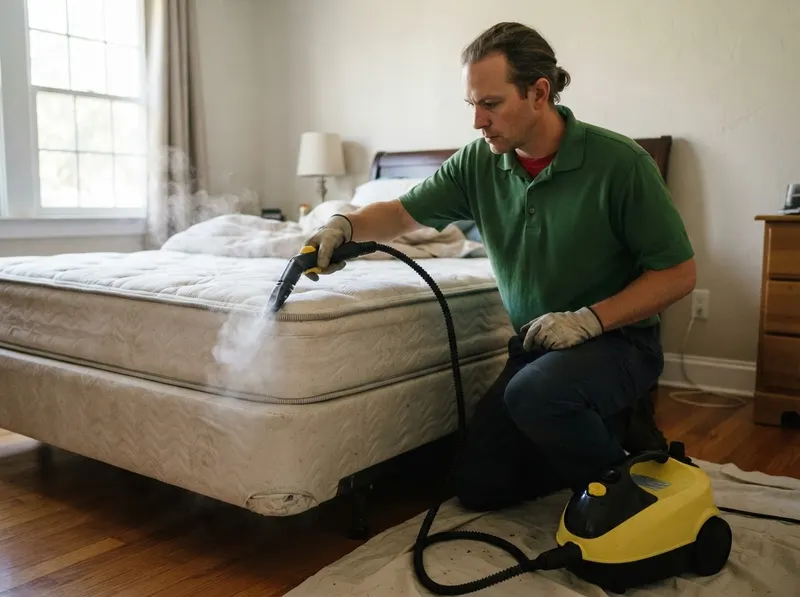
Bed bug remediation addresses infestations of Cimex lectularius that take refuge inside mattress seams, behind picture frames, and within wall crevices of historic plaster or modern drywall. The humid coastal climate of the Carolina Lowcountry enables accelerated reproductive cycles when indoor temperatures remain between 70°F and 80°F. For property owners in historic neighborhoods like Harleston Village and South of Broad, bed bug populations frequently migrate into ancient heart-pine floorboards and detailed decorative molding. In high-turnover hospitality hubs such as Radcliffeborough or newer rental inventory across Daniel Island, transient luggage introductions create isolated point-source introductions that mandate clinical containment rather than broad-spectrum chemical drenching.
Selecting remediation involves choosing between targeted liquid application or structural heat treatment. Whole-room thermal remediation utilizes high-output industrial heaters to elevate structural air temperatures to an insecticidal window of 120°F to 135°F for at least 90 minutes, an operational protocol validated by the USDA for complete mortality across all life stages. This method penetrates deeply into structural cavities, making it suitable for heavily furnished residences in Wagener Terrace or Cainhoy Peninsula without requiring extensive textile disposal. Conversely, targeted spot applications combine desiccant dusts like amorphous silica gel with EPA-registered insect growth regulators, establishing an effective defense for single-room occurrences in West Ashley or James Island where furnishings are minimal. The operational trade-off rests between prep time and immediate occupancy: thermal programs allow re-entry the same evening, whereas liquid residual applications often require staged follow-up assessments over 14 to 21 days.
Effective eradication demands strict structural hygiene and compliance with safety standards outlined by the Centers for Disease Control and Prevention. Technicians isolate contaminated textiles in soluble bags for laundering at temperatures exceeding 120°F, following textile safety parameters documented by the National Institute of Standards and Technology. To protect coastal ecosystems and indoor air quality, treatments utilize non-repellent formulations authorized under the Clemson University Department of Pesticide Regulation, avoiding off-target runoff into fragile marshland watersheds surrounding Charleston County. Electrical outlets and utility penetrations receive targeted void treatments following safety guidelines established by the Occupational Safety and Health Administration to ensure non-conductive application around energized wiring. Structural preparation requirements, heating thresholds, and disposal practices align with building preservation standards monitored by the National Park Service Technical Preservation Services, ensuring treatments do not compromise historic timber or fragile lath-and-plaster installations. Property managers must also review occupancy codes enforced by the U.S. Department of Housing and Urban Development to maintain continuous habitability records following certified pest clearance.
Every job gets a firm, written price after a free on-site visit.
Tell us about your bed bug remediation job in Charleston and we'll send a clear, written quote, usually the same day.
 WillowCrest Pest Management